
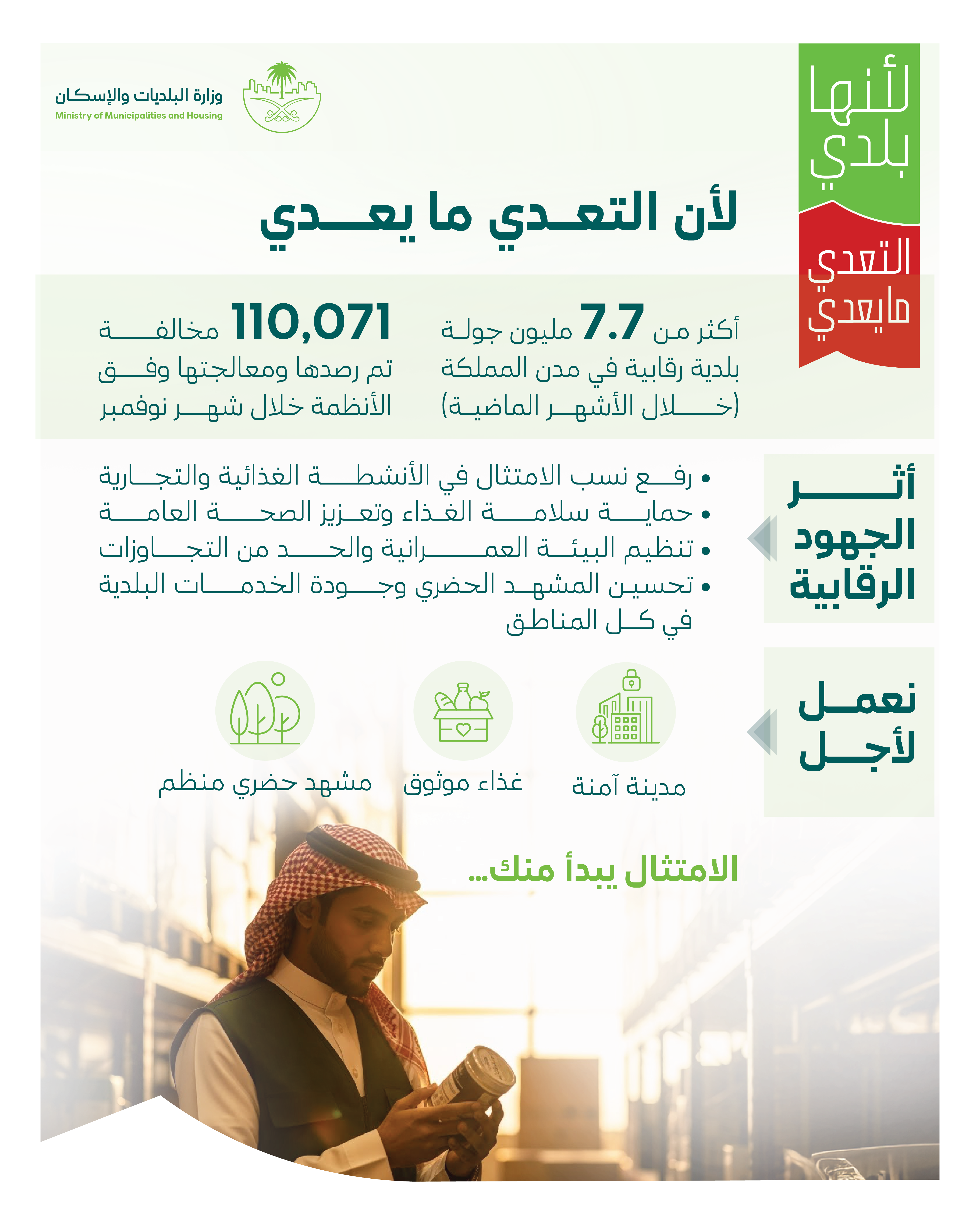
The Ministry of Municipalities and Housing revealed that municipalities and affiliated local authorities carried out more than 7.7 million inspection rounds in recent months across cities, neighborhoods, commercial establishments, and construction sites as part of ongoing efforts to improve the urban landscape and enhance quality of life in cities across the Kingdom. The Ministry explained that inspection activities in November alone resulted in detecting and addressing 110,071 violations across various municipal sectors. It noted that monitoring efforts rely on an advanced technological ecosystem, including the AI powered “Balady Lens” system and geospatial analytics to identify visual distortions, in addition to surveillance cameras within food and health establishments and the use of approved checklists for monitoring commercial, food, and construction activities. The Ministry emphasized that municipal oversight is a core component of its regulatory and operational responsibilities, given its direct connection to pedestrian safety, neighborhood cleanliness, food safety, and the quality of daily services relied upon by residents. These efforts, it added, have contributed to higher compliance rates in commercial and food sectors, enhanced food safety, improved the urban landscape, and strengthened the organization of the built environment across the Kingdom. The Ministry stated that it will continue in the coming period to expand technology enabled monitoring, improve response efficiency to reports, and increase the presence of field teams in neighborhoods, thereby enhancing municipal service quality and maintaining a safe and balanced urban environment. The Ministry also urged community members and establishments to support monitoring efforts by reporting violations through approved channels, stressing that adherence to regulations is a shared responsibility and that community partnership is a key pillar in improving the urban landscape and achieving cleaner, safer, and higher quality cities across the Kingdom

The Ministry of Municipalities and Housing has updated the municipal regulations governing private slaughterhouses as part of its ongoing efforts to improve operational efficiency, enhance service quality, and strengthen municipal compliance. The update was carried out in coordination with the Ministry of Environment, Water, and Agriculture to support public health and ensure a safe and well organized urban environment. The Ministry explained that the new updates aim to develop the business environment within the private slaughterhouse sector, empower investors, and increase compliance with municipal requirements, contributing to reducing violations and improving the urban landscape. It clarified that the scope of the updated requirements covers all locations operating private slaughterhouse activities. Key prerequisites for obtaining licenses include adherence to the municipal licensing procedures and operational standards, securing Civil Defense approval prior to license issuance, and providing a valid commercial registration that lists the activities to be licensed. The Ministry emphasized that this update is part of an integrated framework through which it seeks to develop municipal services and enhance operational efficiency across the Kingdom’s regions. These efforts support the sustainability of the municipal sector and contribute to improving quality of life and creating a more organized and high quality urban environment. The updated requirements for private slaughterhouses can be accessed through the following link: https://momah.gov.sa/sites/default/files/2025-10/alashtratat%20albldyt%20llmsalkh%20alahlyt.pdf
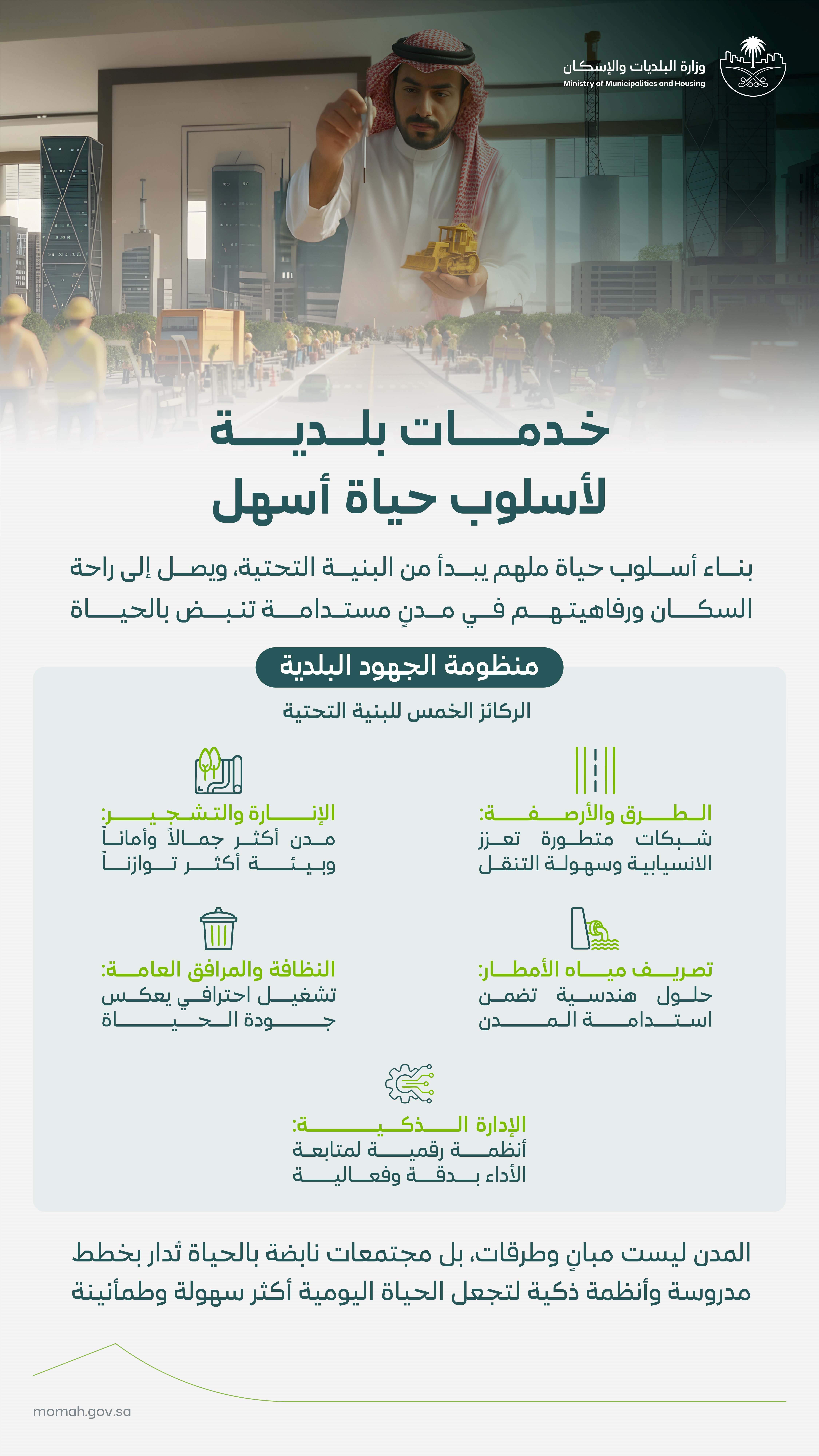
The Ministry of Municipalities and Housing emphasized the vital role that municipal services play in shaping a more convenient lifestyle and improving the quality of life in Saudi cities. It noted that integrated infrastructure and daily operational services are fundamental elements that contribute to creating a balanced and sustainable urban environment that meets residents’ needs in line with the objectives of Saudi Vision 2030. The Ministry explained that municipalities across the Kingdom manage a wide system of services that directly impact daily life, including road networks, sidewalks, lighting, landscaping, and rainwater drainage, in addition to sanitation services and public facilities. It highlighted that the integration of these services enhances the efficiency and sustainability of cities, improves the urban landscape, and supports the development of more attractive living environments. The Ministry stated that showcasing these efforts aims to raise awareness of the essential role played by the municipal system in supporting urban development, and to clarify that what residents experience is the result of continuous engineering and operational work based on precise planning and ongoing field monitoring to ensure the consistent delivery of high quality services. It further affirmed that Saudi cities today are managed through modern operational systems and specialized teams working in harmony to ensure infrastructure readiness and improve service efficiency. These efforts, the Ministry stressed, form a key pillar in enhancing quality of life and fostering thriving urban environments. The Ministry concluded that its efforts to improve municipal service efficiency aim to provide a higher quality and more accessible urban environment for residents by developing facilities and enhancing operations, ultimately contributing to a better lifestyle across Saudi cities.
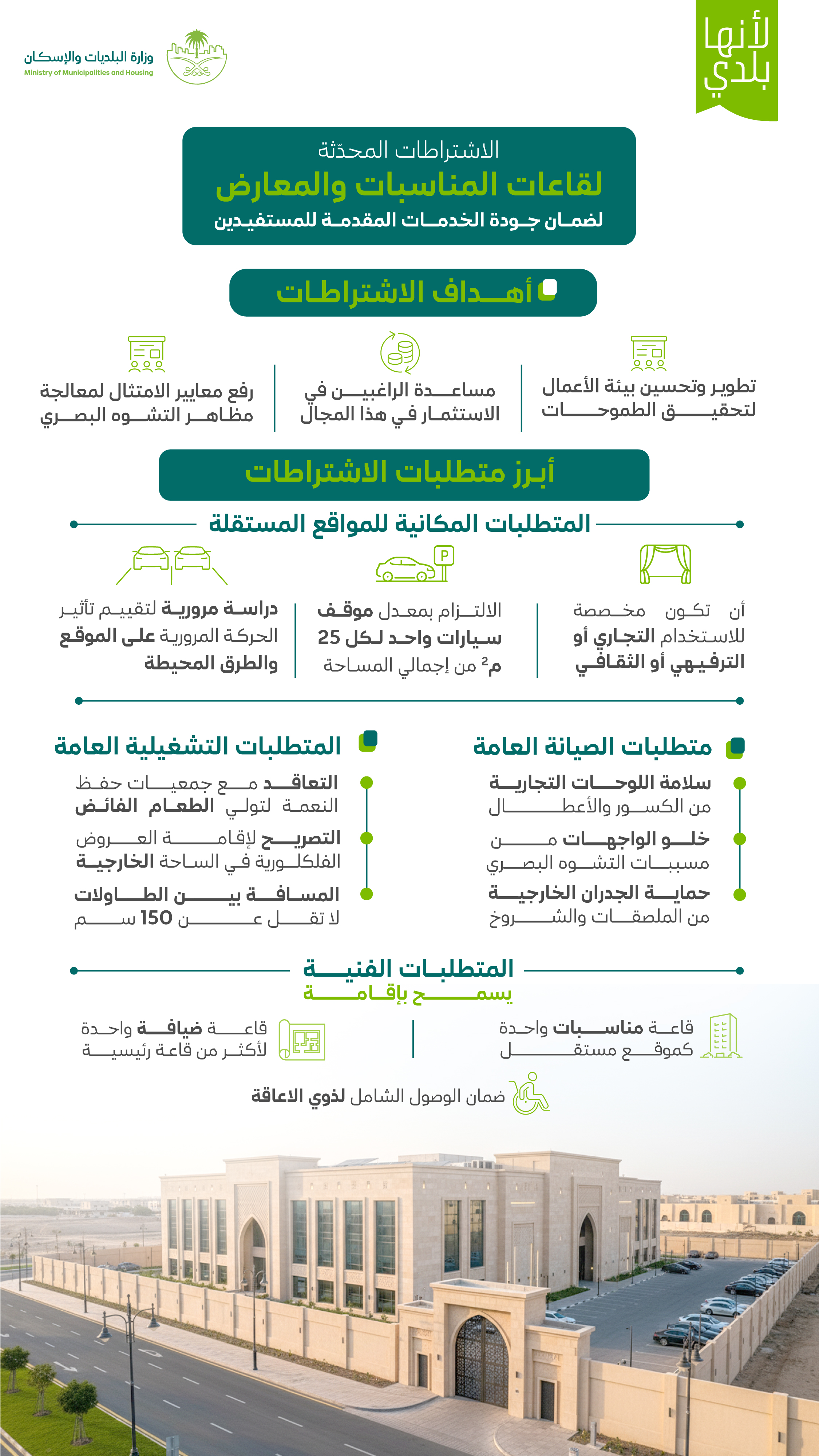
The Ministry of Municipalities and Housing has approved new regulatory requirements for event and exhibition halls as part of its ongoing efforts to enhance the business environment, raise compliance with municipal regulations, and strengthen the sector’s investment appeal. The Ministry explained that the requirements include several conditions for obtaining a municipal license, such as providing a valid commercial registration, securing Civil Defense approval, and ensuring that hall locations comply with planning regulations both within and outside urban boundaries. The requirements also cover detailed organization of interior spaces, including the main hall, hospitality areas, reception zones, and service facilities. It noted that these requirements aim to regulate the operation of event and exhibition halls designated for commercial, entertainment, or cultural use, in accordance with clear technical, architectural, and operational standards. This contributes to enhancing safety, improving efficiency, and elevating the experience of investors and beneficiaries. The Ministry emphasized the importance of adhering to the Urban Building Code or the approved urban guidelines in the region where the facility is located, in addition to meeting fire safety and protection requirements, installing surveillance cameras, and ensuring full accessibility for persons with disabilities through properly designed entrances, ramps, and parking spaces. It added that these requirements form part of an integrated regulatory framework designed to improve service quality, enhance operational efficiency, and support the local economy in alignment with the sustainable urban development goals of Saudi Vision 2030. The requirements can be accessed through the following link: https://momah.gov.sa/sites/default/files/2025-04/ashtratat%20qa%60at%20almnasbat%20walm%60ard.pdf
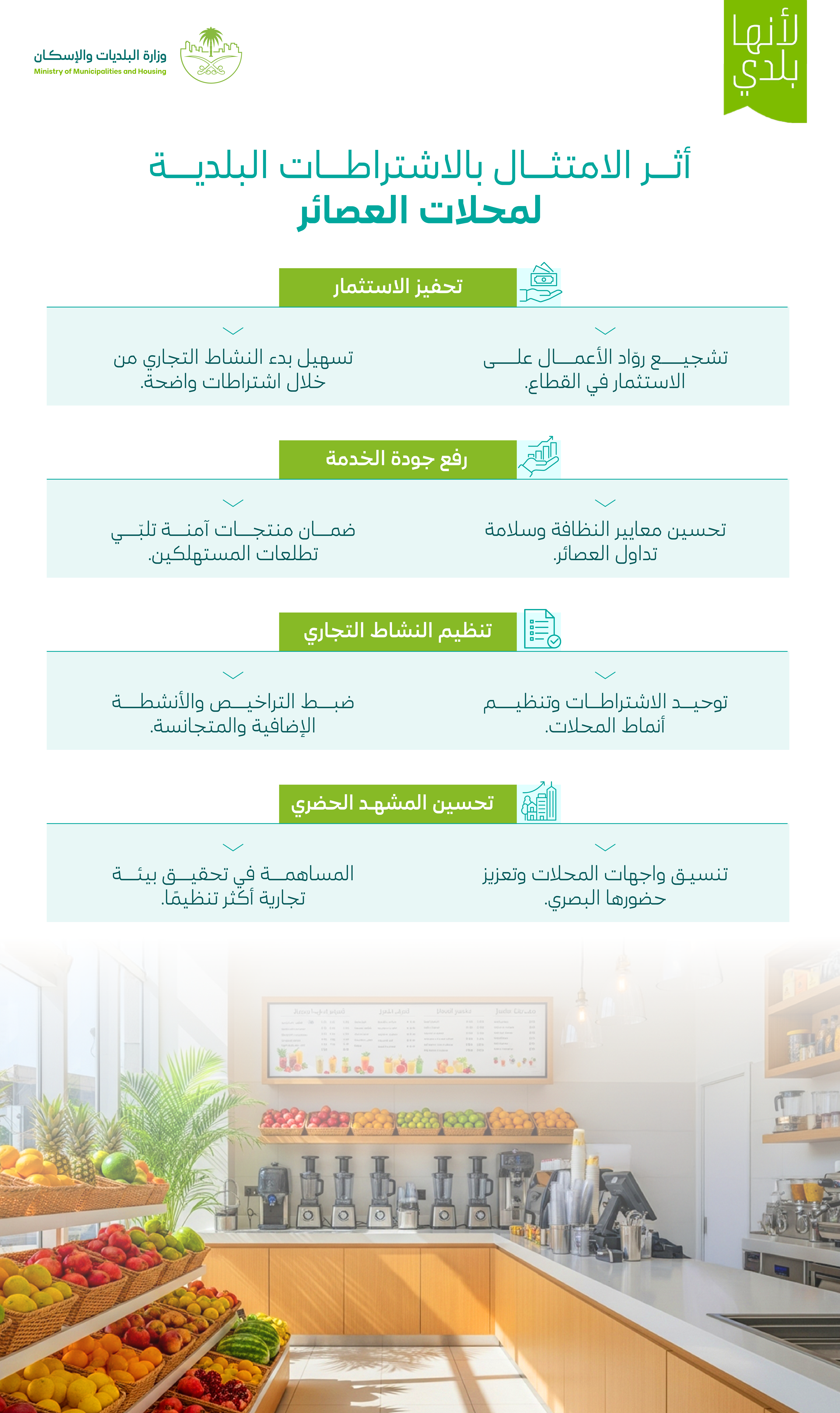
Ministry of Municipality and Housing Adopts New Regulations for Juice Shops to Enhance Food Safety”
The Ministry of Municipality and Housing has adopted new regulatory requirements for juice shops, aimed at raising compliance levels, strengthening food safety, and controlling preparation, storage, and serving practices to ensure service quality and protect consumers. The Ministry explained that the regulations define planning standards for the locations of juice shops and kiosks, requiring them to be situated within approved commercial areas, on commercial streets, or in existing centers, with appropriate space allocated for each activity. It stressed that kiosks are prohibited near entrances or gathering areas unless a minimum distance of six meters is maintained, while allowing kiosks in shopping complex parking lots subject to municipal approval. The regulations also require independent functional areas within each shop, including separate zones for preparation, serving, and storage, to ensure process separation, higher hygiene standards, and prevention of contamination during beverage preparation. Furthermore, the Ministry noted that the regulations include multiple preventive measures, such as providing a clear list of products, ingredients, and potential allergens; prohibiting the serving of any beverage without accurate information on preparation date and components; and adhering to recommended cooling conditions. It emphasized that products not meeting the standards set by the Saudi Food and Drug Authority must not be displayed or sold. The Ministry highlighted the importance of providing signage that includes the unified QR code of the Saudi Business Center and a price list, as well as ensuring permanent availability of electronic payment methods. Shops must also display internal awareness materials promoting healthy practices, provide clean and tightly sealed waste containers, and designate a separate area for waste collection away from preparation zones to guarantee a safe operating environment. The Ministry of Municipality and Housing reaffirmed its commitment to continuously updating municipal requirements for various commercial and service activities, as part of its efforts to promote public health and improve service efficiency in Saudi cities. The regulations can be accessed through the provided link: https://momah.gov.sa/sites/default/files/2025-07/ashtratat%20mhlat%20al%60sayr-bqrar%20ala%60tmad.pdf.
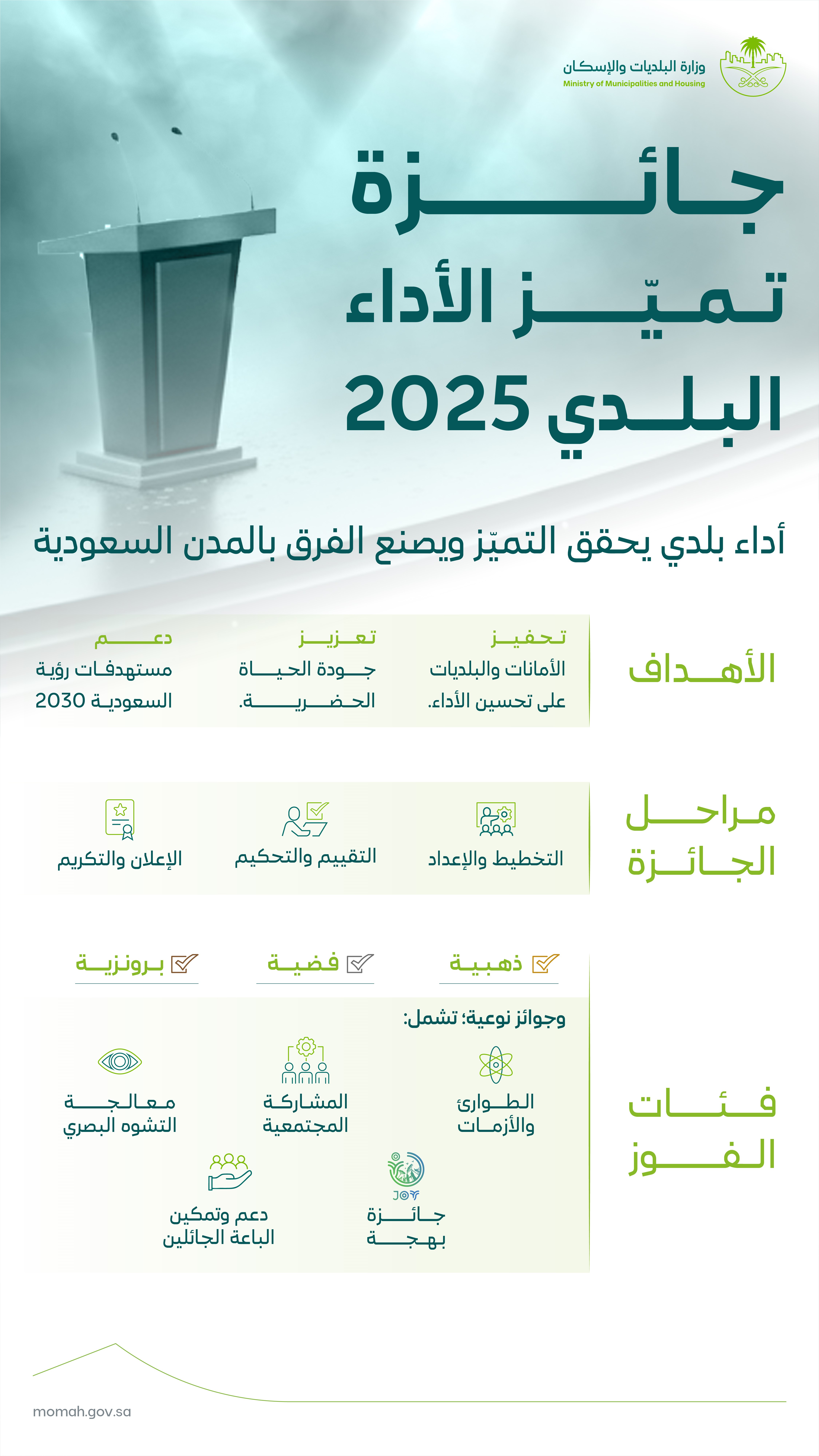
The Ministry of Municipality and Housing has launched the second edition of the Municipal Performance Excellence Award 2025, dedicated to municipal authorities. The award aims to foster positive competition among municipalities and enhance the quality of services provided in Saudi cities, thereby contributing to improved quality of life and supporting the objectives of Saudi Vision 2030. The award seeks to encourage municipalities to adopt best practices in urban management, raise the efficiency of the municipal sector, and improve the beneficiary experience through more effective and innovative services. In the 2024 edition, the Qassim Municipality won first place and the Gold Category, while Riyadh Municipality received the Silver Category, and Madinah Municipality earned the Bronze Category. Additionally, the municipalities of the Eastern Region, Hail, and the Northern Borders were honored under the excellence tracks. The Ministry emphasized that the award is part of its efforts to instill a culture of institutional excellence in the municipal sector, motivating municipalities to elevate service levels and build more prosperous cities with a higher quality of life.

The Ministry of Municipalities and Housing announced that the “Certified Monitor” initiative has witnessed wide engagement since its launch last week, with more than 13,000 beneficiaries from across the Kingdom registering. Of these, over 5,000 participants successfully completed the accredited training programs and obtained the “Certified Monitor” certificate. During the same period, the platform received more than 2,000 reports of various municipal violations. The Ministry explained that the strong turnout reflects public awareness and eagerness to contribute to improving the urban landscape and addressing visual distortions. It emphasized that the initiative has become a national model for empowering society to play an active role in municipal oversight, reinforcing the principle of partnership and shared responsibility between citizens and the municipal sector. The Ministry noted that the “Certified Monitor” initiative builds on its efforts to develop field monitoring tools and transition toward smart, data-driven oversight using digital technologies. Through the “Baladi” platform, members of the community can register, complete a specialized online training course, and qualify as “Certified Monitors” authorized to report municipal violations by submitting documented reports with photos, geographic location, and accurate information. The Ministry added that all reports undergo a comprehensive digital verification system to ensure the accuracy of data, images, and locations provided. Reports are processed electronically until closure within a unified monitoring system. It further highlighted that the financial rewards mechanism grants participants up to 25% of the value of the recorded violation, based on specific criteria that consider the severity of the violation and the difficulty of detecting it. Since its launch, the initiative has contributed to strengthening field monitoring, accelerating the handling of violations, and improving response quality within municipalities and secretariats. This aligns with the Ministry’s direction to enhance operational efficiency and leverage technological solutions to reinforce compliance and field governance. The Ministry stressed that the “Certified Monitor” represents one of the key tracks of municipal digital transformation, aimed at enhancing community participation and promoting a culture of positive oversight. It confirmed its commitment to expanding the initiative to cover new areas within the municipal system, thereby contributing to building more organized, beautiful, and sustainable cities, in line with Saudi Vision 2030 objectives to improve quality of life and raise the efficiency of municipal services across all regions. It is noteworthy that the Council of Ministers, in its session held on November 4, 2025, approved the granting of financial incentives to individuals who contribute to uncovering violations of the municipal penalties regulations, in accordance with a set of governing rules and standards. This decision strengthens municipal performance and reinforces the principle of community partnership in monitoring and improving service quality.
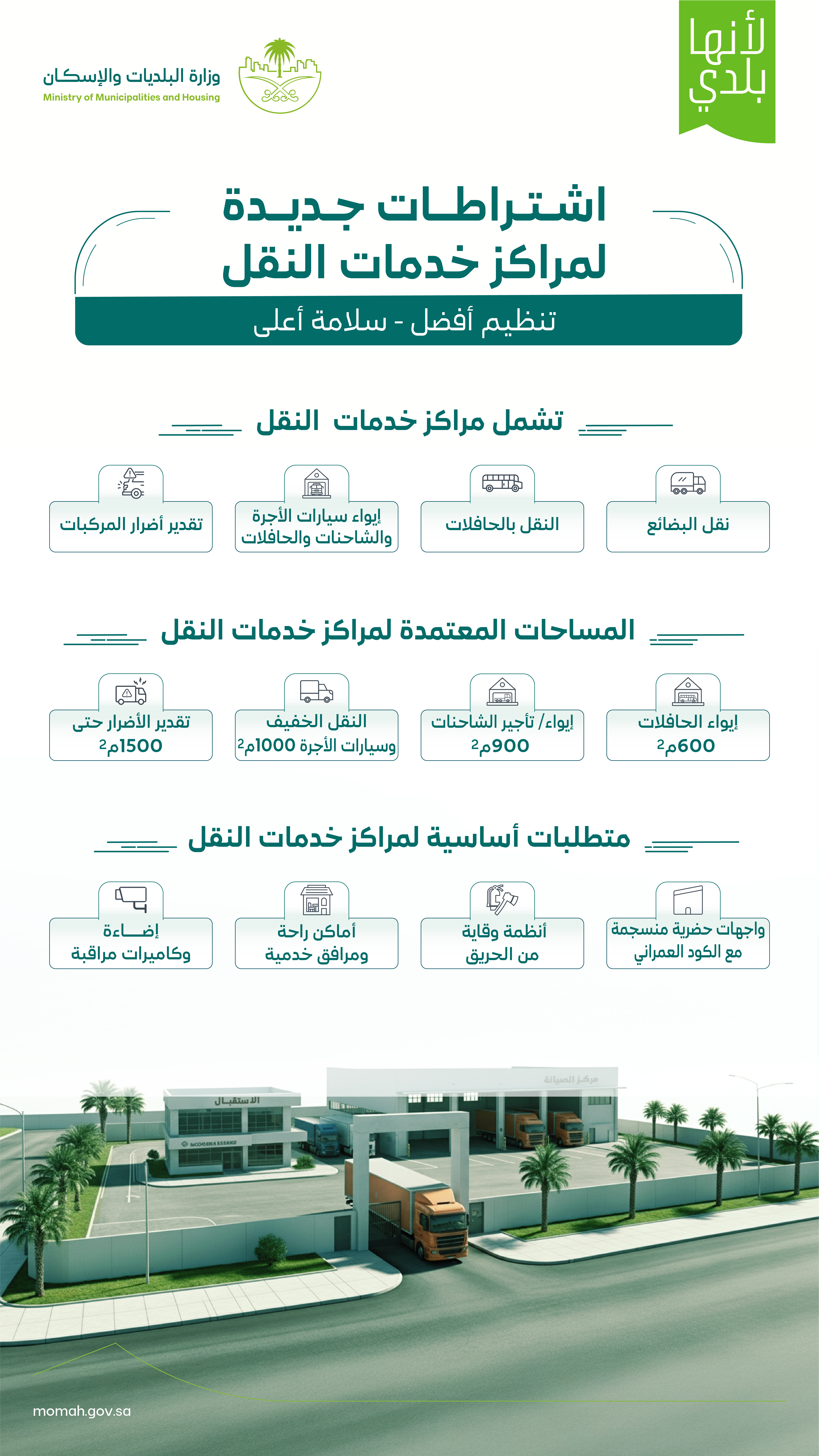
The Ministry of Municipalities and Housing has approved municipal regulations for transport service centers, as part of its efforts to develop the business environment, improve the quality of services provided in the sector, and promote investment in activities related to transport and logistics. These measures aim to improve the urban landscape and raise levels of organization and compliance. The Ministry explained that the regulations include a comprehensive classification of transport service centers, covering freight transport centers, bus transport centers, truck, bus, and taxi accommodation centers, vehicles attached to commercial activities, light transport centers, as well as centers for assessing vehicle damage of various types. The regulations set precise spatial requirements, stipulating a minimum area of 600 square meters for bus accommodation centers, 900 square meters for truck accommodation or rental centers, and 1,000 square meters for taxi or light transport accommodation centers. Vehicle damage assessment centers are required to range between 600 square meters for Category II and 1,500 square meters for Category I. The Ministry emphasized the need to provide sufficient parking spaces, safe entrances and exits, and a comprehensive traffic study of the site and surrounding roads, while adhering to setbacks, height restrictions, and landscaping requirements in line with approved building codes. It further noted that the technical and architectural requirements mandate urban façades consistent with the urban code, the use of materials that meet standard specifications for flooring and ceilings, installation of modern lighting systems and surveillance cameras, as well as the provision of rest areas for drivers, prayer rooms, restrooms, and storage facilities equipped for equipment storage. Operational requirements include adherence to electronic payment methods, maintaining cleanliness and waste management, installing fire protection systems in accordance with the Saudi Building Code (SBC-801), and prohibiting the use of sidewalks and public facilities. Additionally, centers must comply with regulations governing supplementary and compatible activities, which may not exceed 50% of the total licensed area. The Ministry affirmed that the adoption of these regulations is part of its ongoing efforts to enhance the efficiency of transport service centers, organize their work environment, and strengthen compliance and commitment. These measures align with the objectives of Saudi Vision 2030 to improve quality of life, develop cities, and enhance infrastructure efficiency in support of the transport and logistics sector.

The Ministry of Municipalities and Housing has approved the Guide for Confiscation and Custody of Materials and Tools, a regulatory step aimed at unifying municipal policies and procedures, raising compliance with laws and regulations, safeguarding public health and safety, and enhancing quality of life in Saudi cities. The Ministry explained that the adoption of the guide is based on the Municipal Violations Penalties Regulation and its executive rules, serving as a unified legal reference to be applied across all secretariats and municipalities. This strengthens oversight efficiency, prevents inconsistencies in procedures, and ensures fairness and transparency in law enforcement. The guide regulates procedures for confiscating non-compliant materials and tools, outlining mechanisms for their transport and storage in designated facilities equipped with the necessary technical requirements. Violators are responsible for covering transport and guarding costs, and the guide ensures that confiscated items are not used during custody. It also specifies cases requiring precautionary temporary closure of establishments to protect public health and safety. The Ministry noted that the guide includes procedures for destroying unsafe or hazardous materials and tools under the supervision of specialized technical committees, with violators bearing the associated costs. It also regulates mechanisms for reclaiming confiscated items after fines are paid and legal requirements are met, and allows for the auctioning of unclaimed items. Detailed mechanisms are provided to address different cases, such as large-sized materials and tools that are difficult to transport, where samples may be taken for testing on-site. The guide also mandates immediate handling of perishable materials by sending samples directly to the relevant authority within 24 hours of confiscation, with testing periods not exceeding three days, and requires suitable storage facilities until examinations are completed. The guide stipulates that precautionary closure of a shop or establishment may not exceed three consecutive days and cannot be extended under any circumstances. Sites may be reopened if no grounds are found to justify continued closure, ensuring procedural integrity and protecting public health. This initiative is part of the Ministry’s ongoing efforts to strengthen the implementation of laws and regulations, develop oversight and regulatory tools, and support the objectives of Saudi Vision 2030 in improving the urban landscape, enhancing compliance, and achieving higher standards of safety and quality of life. The Guide for Confiscation and Custody of Materials and Tools can be accessed through the following link: https://momah.gov.sa/sites/default/files/2025-09/dlyl_alhjz_walthfz_%60ly_almwad_waladwat%20%20V%2017.1alnskht%20alnhayyt.pdf.

The Ministry of Municipalities and Housing has outlined the mechanism for granting financial incentives to individuals who contribute to uncovering violations of the municipal penalties regulations. This comes within a comprehensive regulatory framework aimed at empowering the municipal sector, strengthening community oversight, and improving the urban landscape in Saudi cities. The Ministry explained that this step builds on its efforts to involve community members in monitoring municipal violations, particularly visual distortions, through the “Certified Monitor” initiative. This initiative is one of the innovative oversight tools based on digital technologies, contributing to enhancing quality of life and improving the urban environment. The decision is based on qualifying and training community members to obtain the status of “Certified Monitor” by registering through the “Balady” platform and completing an accredited training program under specific regulations. The Ministry emphasized that reports are subject to strict standards to ensure the accuracy of information on violations. Reports must be documented with clear photos, precise geographic locations, and complete information to be officially recognized. Financial rewards will be granted to reporters based on the severity of the violation, the difficulty of detecting it, and the effort involved. Rewards can reach up to 25% of the total value of the recorded violation, within a robust governance system that ensures transparency and prevents duplication or redundancy of reports. It added that the “Certified Monitor” initiative represents an extension of the community oversight model adopted by the Ministry, aimed at enhancing public participation and instilling a culture of compliance and shared responsibility in protecting the urban landscape and public safety from random practices and municipal violations. The decision seeks to empower society to play an active role in safeguarding the urban environment and to support the Ministry’s objectives of building more organized, attractive cities and a more efficient and inclusive municipal sector. It is noteworthy that the Council of Ministers has approved the granting of financial incentives to those who contribute to detecting violations of the municipal penalties regulations, in accordance with a set of governing rules and standards. This decision enhances the efficiency of municipal work and reinforces the principle of community partnership in oversight and improving service quality.

The Ministry of Municipalities and Housing has emphasized the mandatory requirement to obtain municipal licenses before engaging in any commercial or construction activity within cities. It stressed that practicing any activity without a valid license constitutes an immediate violation, subjecting the responsible party to penalties and fines, which may include site closure and suspension of certain services at high-risk locations. The Ministry clarified that a municipal license is not a mere formality but a legal obligation that safeguards the rights of property owners and investors. It provides a clear regulatory framework that ensures business continuity, strengthens market discipline, and builds beneficiary confidence. It warned that operating outside this framework exposes violators to accountability and poses direct risks to public safety and the urban landscape. Unlicensed activities may incur fines of up to SAR 50,000 depending on the type of violation, in addition to closure and suspension of services at high-risk sites where public safety is threatened. The Ministry is intensifying its efforts to raise awareness among individuals, business owners, real estate developers, and contractors about the necessity of obtaining municipal licenses before commencing any activity. Licensing is considered a direct responsibility of beneficiaries and a fundamental path to protecting investments from penalties, organizing activities within cities, and ensuring the safe and orderly provision of services to residents. The Ministry’s oversight covers a wide range of activities, including construction works, building renovations, commercial operations, home delivery services, tobacco product outlets, and excavation works. Violating sites are dealt with in accordance with established regulations, leading to fines or closures when necessary, to safeguard neighborhoods, public facilities, and pedestrians. The Ministry stressed the continuation of field monitoring through secretariats, municipalities, specialized teams, and modern monitoring technologies that support direct on-site supervision. It confirmed that violations are addressed immediately in line with regulations, and that the imposition of fines and closures remains an ongoing measure to protect public safety and maintain an orderly urban environment. The Ministry urged all beneficiaries to obtain the required municipal license through the “Balady” platform before engaging in any activity, to avoid fines and closures. It also encouraged community members to report any unlicensed activities via the Call Center (940), affirming that reporting is a shared responsibility that helps stop violations and address them in accordance with the law. It is noteworthy that the “Balady” platform is one of the Ministry’s digital platforms, enabling citizens, residents, and business owners to complete municipal services electronically. These include issuing and renewing municipal licenses, inquiring about commercial activities, submitting reports, and tracking transactions without the need to visit secretariat or municipality offices. Services can be accessed through the link: https://www.balady.gov.sa/en.

The Ministry of Municipalities and Housing has approved new municipal regulations to organize mobile unit activities, aiming to enhance compliance with regulations, ensure a safe operational environment, and improve health and food practices. These measures are expected to elevate service quality and support investment opportunities for entrepreneurs. The ministry clarified that the regulations stipulate designated locations for mobile units, including sites affiliated with municipalities, government entities, private establishments, investment zones, or municipal incubators. Units must maintain a safe distance of at least 10 meters from fuel stations and are prohibited from operating within residential neighborhoods, near emergency exits, or sources of environmental pollution. Technical requirements for mobile units include essential equipment that is non-slip and easy to clean, along with ventilation and air conditioning systems that prevent vapor condensation and maintain an internal temperature not exceeding 25°C. Additional requirements cover thermal insulation, appropriate lighting, and safety measures. Operational regulations mandate obtaining official licenses and site permits from relevant authorities. The use of loudspeakers and smoking inside the unit is prohibited. Units must adhere to designated working hours and operate strictly within their permitted scope. A first aid kit must be available, and strict hygiene standards must be applied. The ministry emphasized that food trucks are subject to stringent food safety requirements, including the use of potable water, dedicated equipment for preparing and washing fruits and vegetables, prohibition of sauce preparation inside the unit, and adherence to cooling, heating, and thawing standards as per the Food and Drug Authority's guidelines. It also highlighted the importance of clearly displaying essential consumer information, including product names, ingredient details, allergens, temperature levels, and expiration dates. A sign indicating the type and source of meat used must be visible, electronic payment services must be consistently available, and the unified electronic code must be prominently displayed on the unit. The Ministry of Municipalities and Housing concluded by reaffirming its ongoing efforts to develop and update municipal regulations across various sectors, in alignment with the goals of Saudi Vision 2030, contributing to public health and enhancing quality of life in cities and communities. For more details on the mobile unit regulations, please visit the following link: https://momah.gov.sa/sites/default/files/2025-08/alashtratat%20albldyt%20ll%60rbat%20almtnqlt%20%283%29.pdf