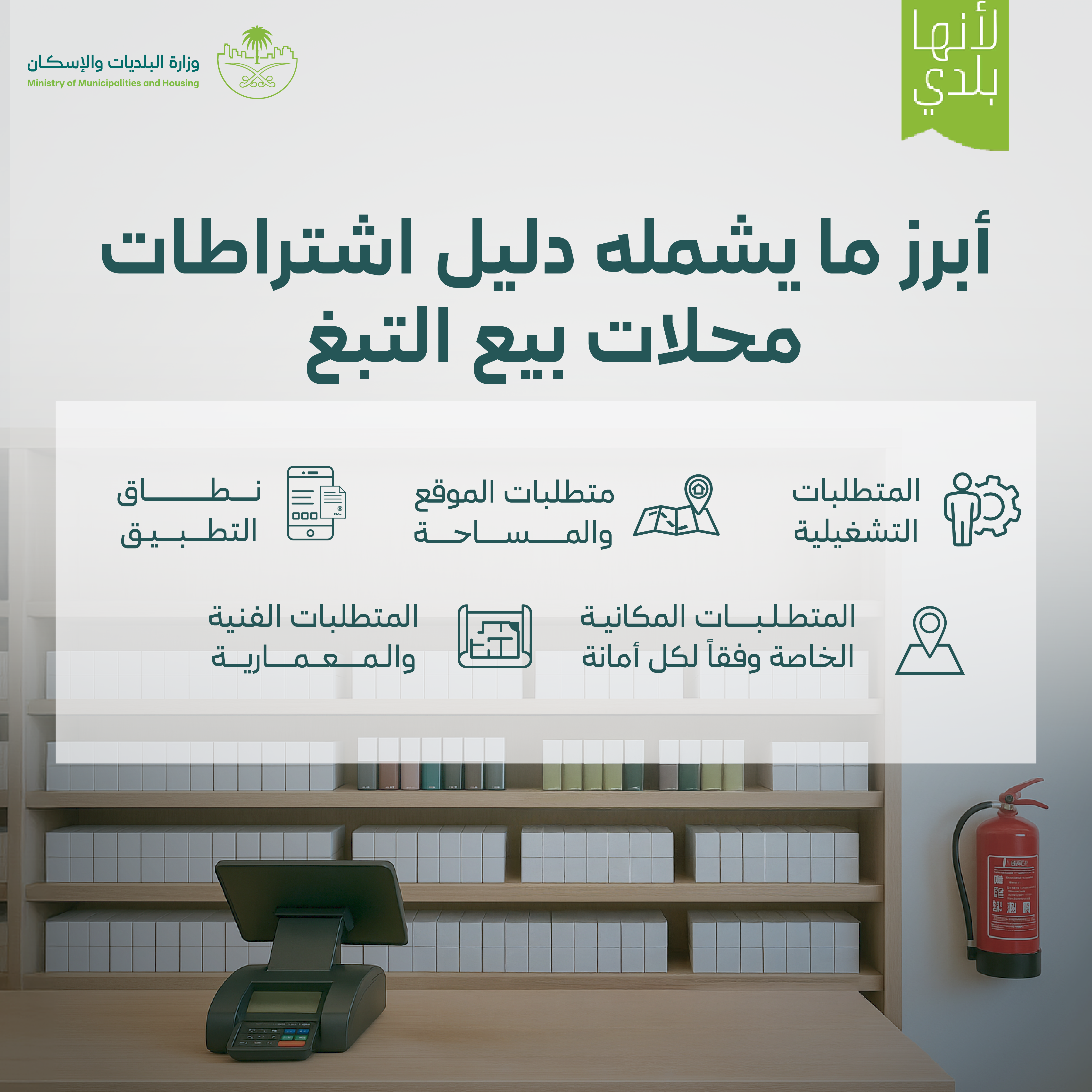
The Ministry of Municipality and Housing has approved regulatory requirements for tobacco product retail stores, aiming to promote public health, ensure compliance with relevant regulations, and establish a safe and orderly commercial environment across cities in the Kingdom.
The ministry clarified that the requirements apply to all stores selling tobacco products and accessories, including cigarettes, shisha, and electronic cigarettes. To obtain a license, applicants must present a valid commercial registration, secure approval from Civil Defense, and fully comply with the Municipal Licensing Procedures System and its executive regulations.
The requirements include spatial conditions, most notably that the store must be located within a commercial building inside the urban boundary and at least 500 meters away from mosques and schools. The minimum store area is set at 36 square meters, with additional conditions determined by each municipality based on street width and site classification.
Investors are also required to meet technical and architectural standards, including facade designs aligned with the Urban Code or Saudi architectural design guidelines, accessible ramps for people with disabilities, installation of alarm and fire suppression systems, and adherence to the Saudi Building Code for ventilation, air conditioning, lighting, and fire prevention.
The ministry emphasized the importance of complying with technical standards outlined in the regulatory guide, which prohibit mixing or repackaging products or selling them in unauthorized packaging. Stores must verify product suppliers, refrain from selling tobacco products to individuals under 18, avoid using public sidewalks beyond store boundaries, install internal and external surveillance cameras, maintain general cleanliness, dispose of waste safely, and offer electronic payment options.
The ministry also stressed the need to display warning signs inside stores with educational messages about the harms of smoking, along with a QR code linked to license data and regulatory authorities to ensure transparency and ease of verification. The regulations prohibit promoting tobacco products or offering them as rewards or free samples, and ban the sale of single cigarettes or products that do not meet standards approved by the Food and Drug Authority.
Municipal authorities will monitor the implementation of these requirements on the ground and apply penalties to violating establishments, as part of efforts to enhance oversight, improve operational efficiency, and ensure compliance with approved regulations—ultimately contributing to a more disciplined and high-quality urban environment.